Towed Array Sensor
What is a towed array
acoustic sensor?
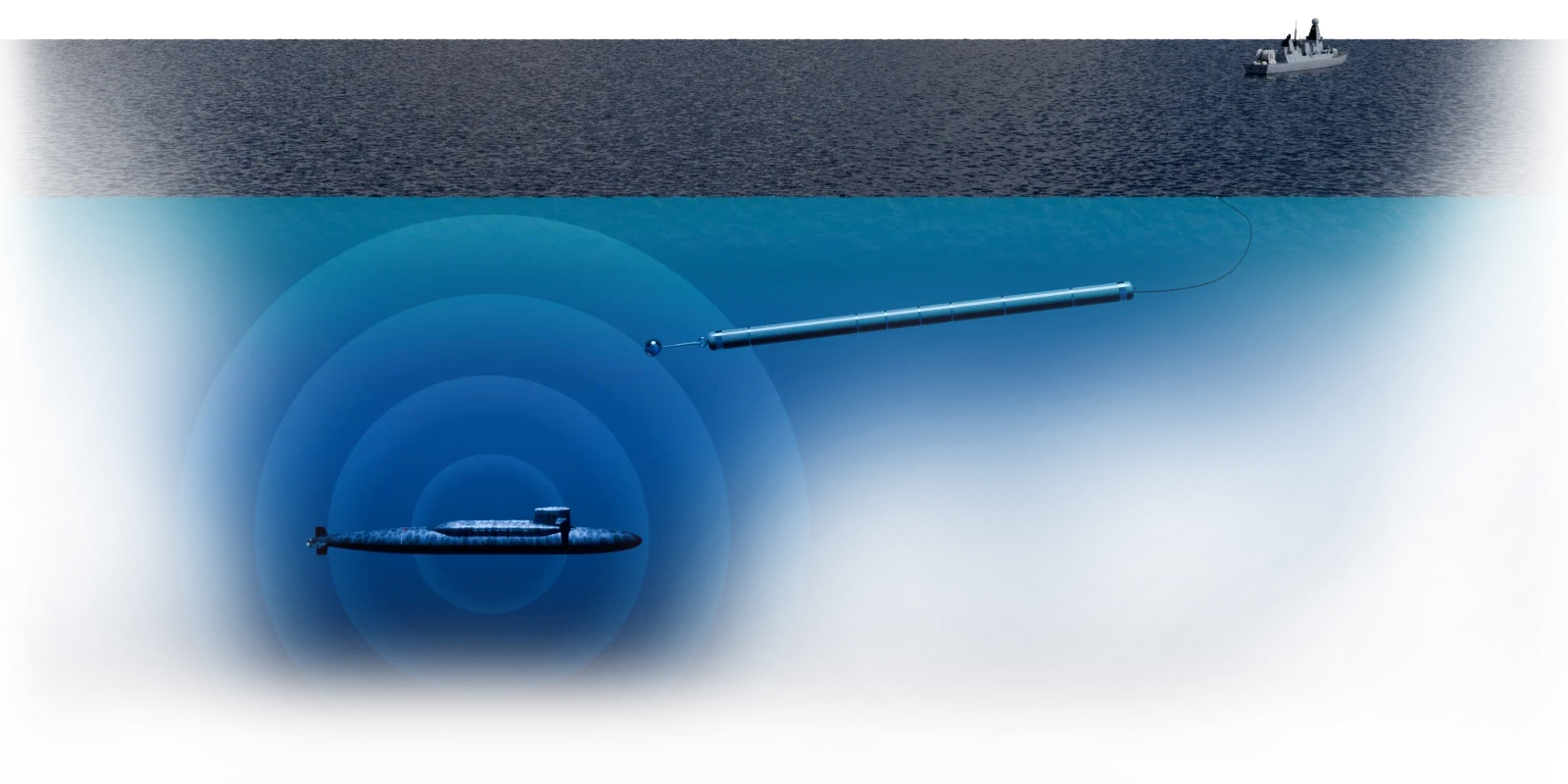
A towed array acoustic sensor is a device that collects underwater sound by deploying a cable at a certain distance behind a vessel.
By minimizing interference from hull noise and enabling wide-area underwater detection, it is widely used for maritime surveillance and operational missions.
High-Sensitivity Sound Detection in Low-Noise Environments
Underwater Target Tracking Support
Real-Time Monitoring System Integration
Long-Distance Detection Possible with Towed Structure
What is the purpose of a towed array acoustic sensor?
The primary objective is to minimize noise interference from the vessel itself and covertly detect submarines at long distances.
- Long-range detection: By deploying the sensors hundreds of meters to several kilometers behind the vessel—away from propeller and engine noise—it can capture even very faint low-frequency sounds without interference.
- Stealth (Passive Detection): Since it only listens to the sounds made by enemy submarines without emitting acoustic signals, it can detect targets without revealing the position of the friendly vessel.
- Optimized for low-frequency reception: The long linear sensor array is optimized for receiving long-wavelength low-frequency acoustic signals, making it advantageous for long-range detection over tens of kilometers.
What are the main components of a towed array acoustic sensor?
The system is broadly divided into onboard equipment and underwater towing equipment.
Towed Section
- Acoustic Array: A cluster of numerous underwater microphones (hydrophones) arranged at regular intervals. It converts underwater acoustic signals into electrical signals.
- Towing Cable: A high-strength cable that connects the vessel and the sensor, supplying power and transmitting data.
- Vibration Isolation Module: A buffer zone that prevents vibrations from the towing cable during operation from reaching the sensor.
- Tail Rope: A rope-like device attached to the end of the array that generates underwater drag to keep the sensor array straight and untangled.
Onboard Section
- Winch & Handling System: A large hoist that adjusts the depth and distance of the sensor by winding or unwinding the cable.
- Signal Processor & Display: Analyzes the vast amount of received acoustic data to calculate the target's range and rock, visualizing it on a monitor.
Operational Notes
As of 2026, the latest TASS has evolved to use sensors with built-in 3-axis accelerometers to solve the 'Right/Left Ambiguity' problem, allowing for immediate identification of the target's accurate direction without zigzag maneuvers.
Detailed system diagrams can be viewed with visual materials on the Defense Acquisition Program Administration (ADD) marine weapon system page.
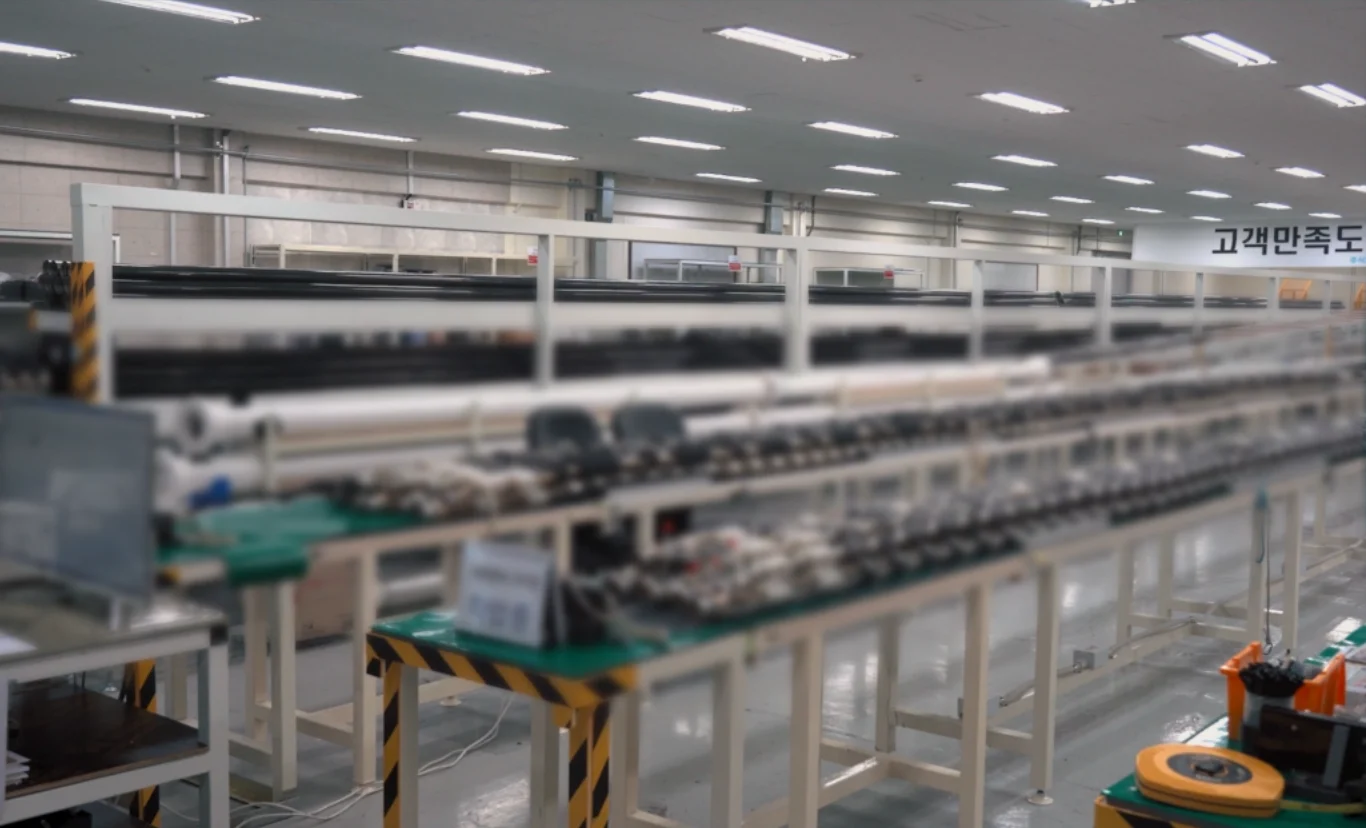
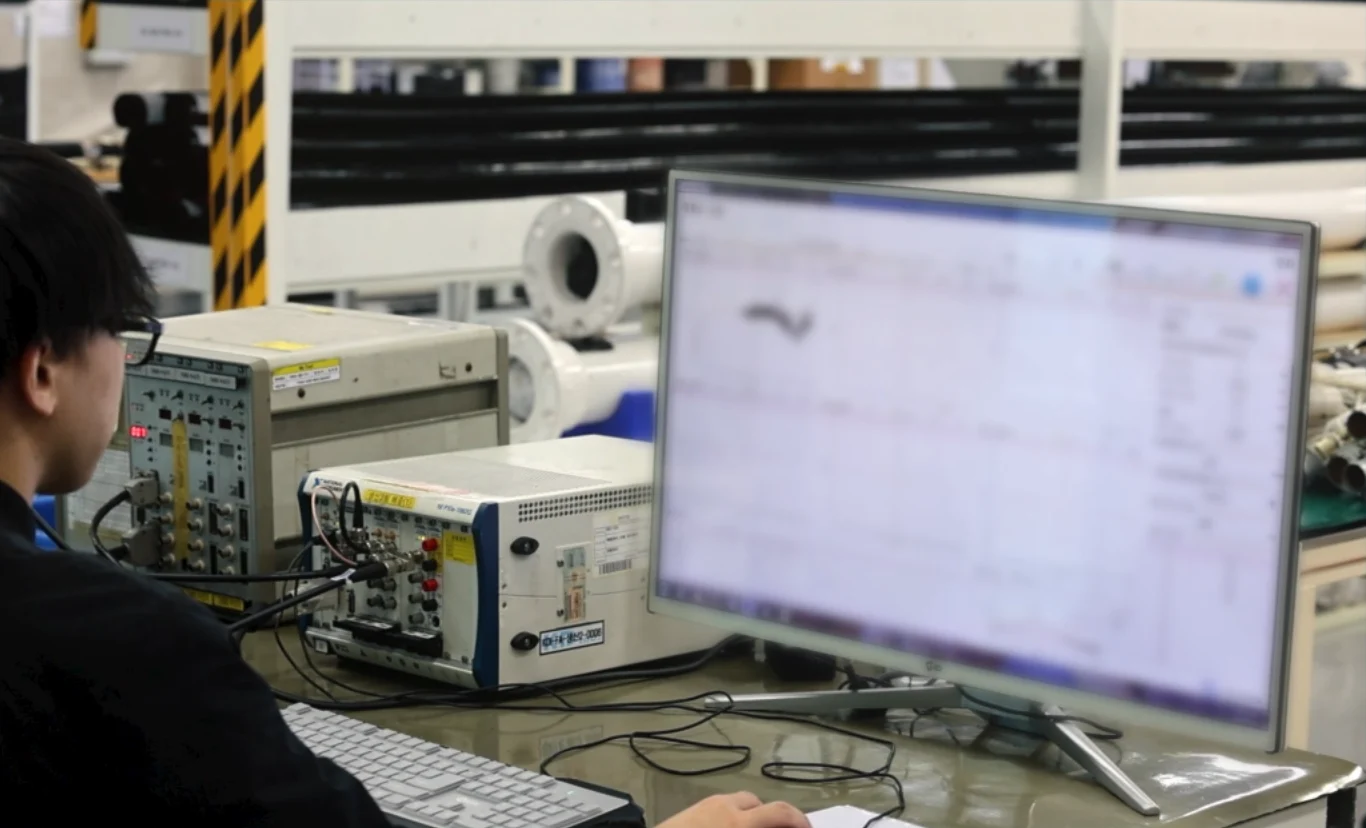
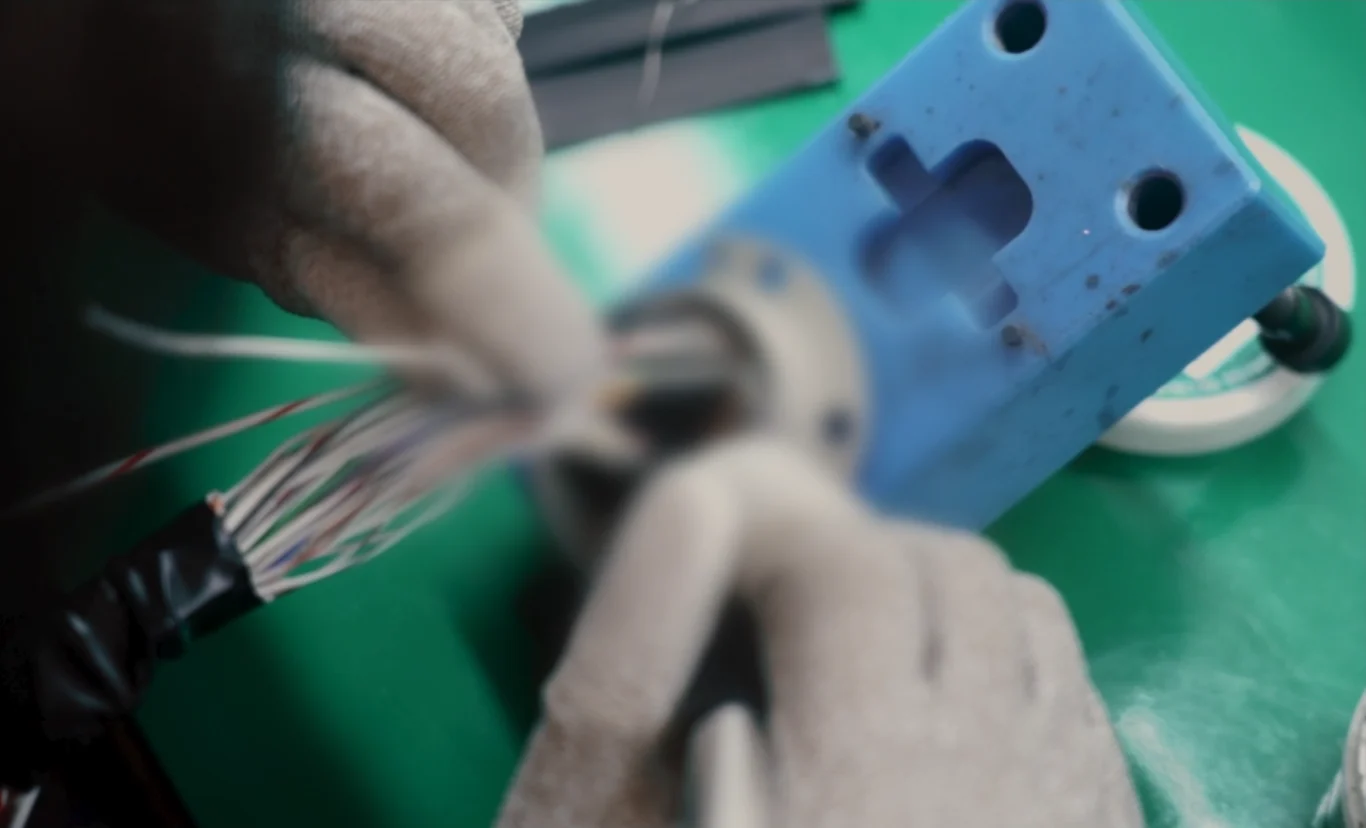
SonarWorks possesses a wide range of accumulated technological systems in the field of towed array acoustic sensors.



Key Components
Key Components
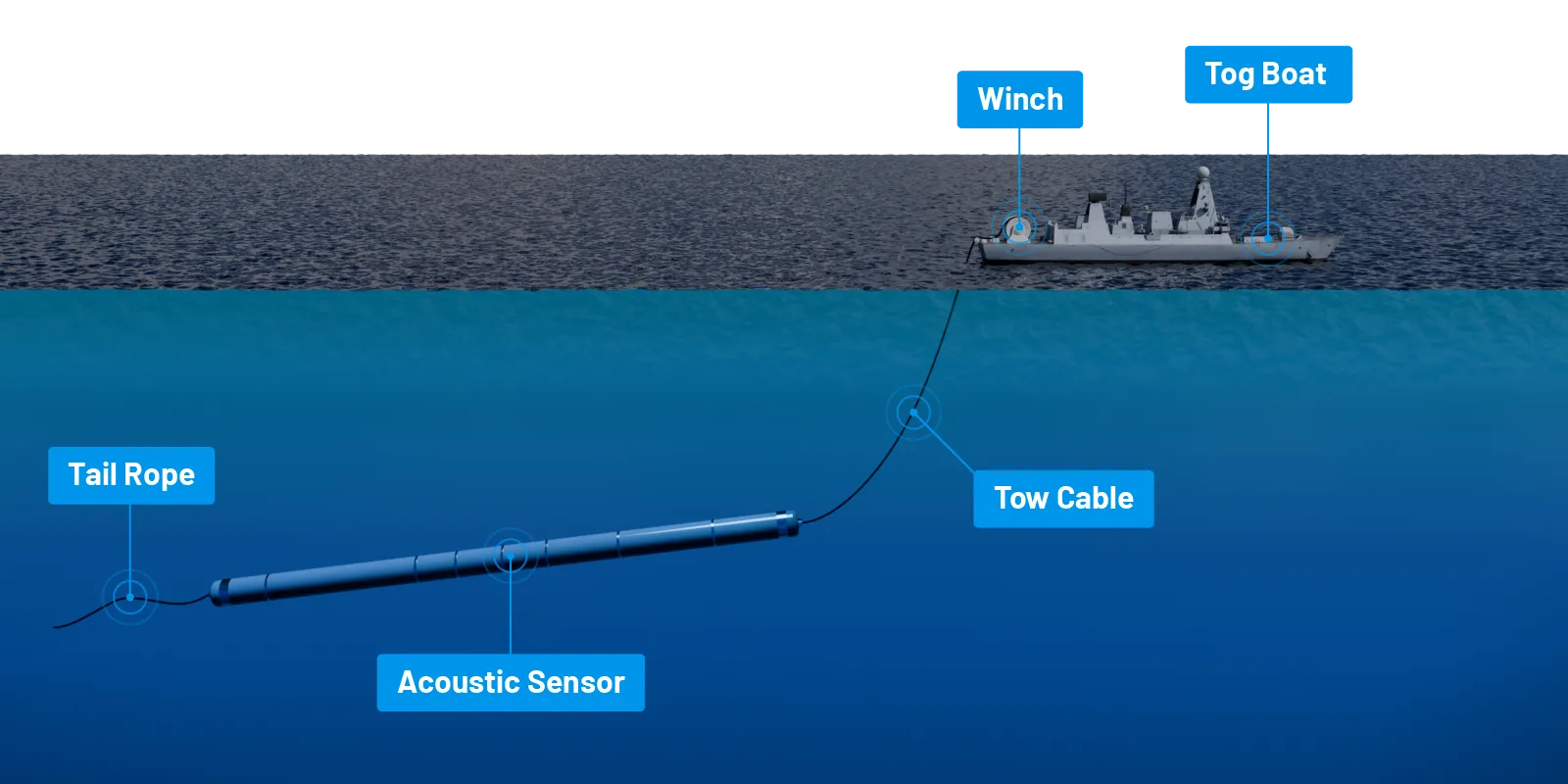
Tugboat
It serves as the main vessel that tows the acoustic sensor system, supplies necessary power to the system, and processes received data to analyze targets.
Winch
It winds or unwinds the towing cable and linear array sensors for deployment and recovery, adjusting the array's depth and distance according to operational conditions.
Towing Cable
It physically connects the vessel and the sensor, enduring tensile forces while serving as a conduit for transmitting acoustic data captured by the sensor and supplying power.
Acoustic Sensor
The core component where multiple hydrophones (underwater microphones) are arranged in a line, detecting subtle acoustic signals generated underwater and converting them into electrical signals.
Tail Rope
Positioned at the very end of the array, it suppresses vibrations occurring during navigation and maintains overall horizontal alignment, stabilizing detection performance.
Vessel Noise Isolation
The main feature of the towed linear array is to keep the receiver far from the vessel's self-noise. By operating at distances of hundreds of meters from the vessel's engine or propeller noise, it can detect very faint sounds from enemy submarines much more clearly.
Low-frequency detection and long-range surveillance
Linear array sensors can be physically extended, making them advantageous for receiving low-frequency signals that diffract well and travel far. This allows for wide-area surveillance, capturing approaching enemy submarines from over tens of kilometers away in advance.
Depth Adjustment
The length of the towing cable can be adjusted to arbitrarily change the sensor's position (depth). This utilizes the characteristics of sound refraction based on sea temperature layers or salinity, placing sensors at specific depths where sound transmits well to maximize detection efficiency.
Directional and Azimuth Measurement
By analyzing the time differences in sound arrival from multiple sensors arranged in a line, the source of the sound is identified. However, a single linear array may encounter 'Left/Right Ambiguity,' which modern systems overcome through vessel maneuvers or twin array technology.
Main Purpose
- Early Warning: Confirms the presence of enemy submarines detected from a distance.
- Target Identification: Determines the type of enemy vessel based on the received acoustic database.
- Torpedo Alert: Detects the noise of torpedoes launched by enemy submarines to enhance vessel survivability.